Diagnostic Hearing Assessments
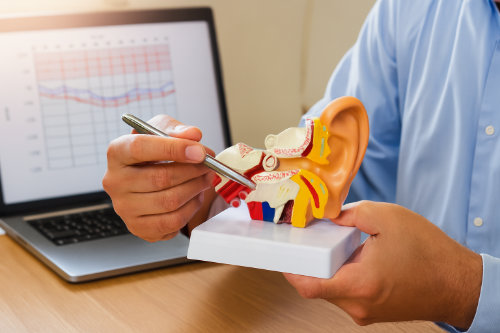
A hearing assessment at hear. begins with pure-tone audiometry. This isa systematic test of the softest sounds you can hear across the speech frequency range, measured separately by air conduction through headphones and by bone conduction through a small vibrator placed behind the ear. The comparison between those two results matters. When bone conduction thresholds are better than air conduction thresholds, there is something affecting the outer or middle ear; sometimes as temporary as a recent cold or fluid behind the eardrum, sometimes something that warrants further investigation. Where there is a meaningful difference between the two ears, masking is applied to the better ear so the results from the poorer ear can be measured accurately and in isolation. Speech audiometry compliments pure-tone testing as a cross-check. Most of the time the two results align predictably. Not always, however. In some cases a person may hear tones reasonably well but struggle more with speech than the audiogram would suggest. That points toward a different kind of processing difficulty.
In those cases the assessment typically extends to speech-in-noise testing and an audible contrast threshold measure to get a clearer picture of what is actually happening. Tympanometry and acoustic reflex testing are in most cases routinely tested as well. Tympanometry measures how well the eardrum and middle-ear system are moving. This test is very useful when an audiologist is trying to determine why bone-conduction results are better than air-conduction results in the audiogram. Acoustic reflexes measure how well nerve pathways are working between the ear and brainstem. Specific reasons for doing this test may be because of an unexplained speech discrimination difficulty, or unexplained hearing asymmetry, or inconsistent responses to tone audiometry despite fairly normal speech understanding. Where there are any clinical concerns around balance, simple bedside vestibular testing may also be carried out before a referral is written. Every assessment at hear. includes a referral letter to a GP, ENT specialist, or balance physiotherapist where one is indicated. There is no additional charge for this. The point of the assessment is not just a set of numbers on a page. It is leaving with a clear explanation of your hearing and a practical plan for what, if anything, comes next.